
Is it possible that a fully optimized Google Business Profile could draw in more clients than your actual site? Google My Business, now Google Business Profile, is key for local search, Maps, and voice results. This guide covers the essential steps to claim, verify, and optimize your listing. The goal is to increase visibility and sales.
Expert insights about GMB SEO companies
Follow this manual to enhance your position in local search results. This helps with refining relevance, prominence, and distance factors. If you follow these steps, you can drive more calls, visits, and reservations while following Google’s rules.
The checklist includes important actions like claiming your listing and adding accurate information. You will also discover how to choose categories, add photos and virtual tours, and list items and services. It also covers enabling messaging and Reserve with Google, linking to Google Ads or Merchant Center, and tracking URLs. Plus, it shows how to monitor reviews and insights for ongoing optimization.
The Importance Of Google My Business For Local Exposure
Having a polished profile is key for attracting local patrons. Google Business Profile shows photos, hours, reviews, and Q&A in Search and Maps. These details can lead to calls, directions, and bookings without a website visit.
Understanding what improves your profile is critical. Begin by updating your name, address, and phone details. Add new photos and regular posts to improve visibility. Use a local SEO checklist to ensure accuracy and consistency.
Google uses your profile differently in Search, Maps, and voice assistants. In Search, you see the local pack and knowledge panels. Google Maps prioritizes distance and star ratings. Voice tools offer immediate responses.
Local searches often favor the map pack over websites. An optimized Google Business Profile can capture more clicks, phone calls, and direction requests. It is essential for companies that depend on foot traffic and same-day reservations.
The Search Generative Experience (SGE) changes how answers are shown. AI Answers and local AI results may present your business information at the top. Make sure you fill in the Services, Menu, and Description fields for AI to use in responses.
Images and reviews are becoming more critical due to AI. A consistent stream of genuine reviews and top-tier photos boosts relevance. Use GMB tips to keep descriptions short, services detailed, and media current for accurate responses.
The table below compares how profiles impact discovery and priorities for each platform.
| Medium | Main Indicators | Key Action |
|---|---|---|
| Search (Local Pack) | Categories, feedback, relevance, distance | Fill categories, get reviews, fix hours |
| Maps | Proximity, star rating, recent photos | Keep location data accurate, add current photos weekly |
| Voice Search | Short descriptions, phone, hours, reviews | Simplify description, verify phone and hours |
| SGE and AI Answers | Description, services, photos, review snippets | Populate description and services, request recent reviews |
How To Qualify For A Google Business Profile
Before you start, check if your business fits Google’s rules. It must be a real place where customers can visit. Establishments such as Starbucks, Walmart, and law firms qualify. Verify that your business name and signs correspond to your public identity.
Not all business can have a Google Business Profile. Online stores and property listings don’t qualify. You must remove non-compliant listings to follow GMB best practices.
Decide how you wish to list your company. If customers visit you, use a storefront address. If you go to them, choose service-area business. Certain businesses, like FedEx Office, are allowed to use both options.
Service-area listings can have up to 20 locations. Indicate your service zones using cities, zip codes, or regions. This helps with local search and follows Google’s optimization tips.
Remember, your business must be open or opening soon. Your profile can only be managed by owners or authorized representatives. Keep clear records of who owns your business. This aids in avoiding future complications with Google.
Locating And Claiming Your Google Business Profile
Begin by searching Google using your exact business name plus city and state. Try prior names, phone numbers, and addresses if you ‘ve moved or rebranded. Look for a knowledge panel on the right side of search results. Seeing a panel usually implies a listing exists for you to claim or review.
Locating knowledge panels via Google Search
Type variations of your name to catch duplicates or old entries. If the knowledge panel shows accurate info, verify ownership to secure control. Should details be wrong, note necessary corrections before claiming or updating.
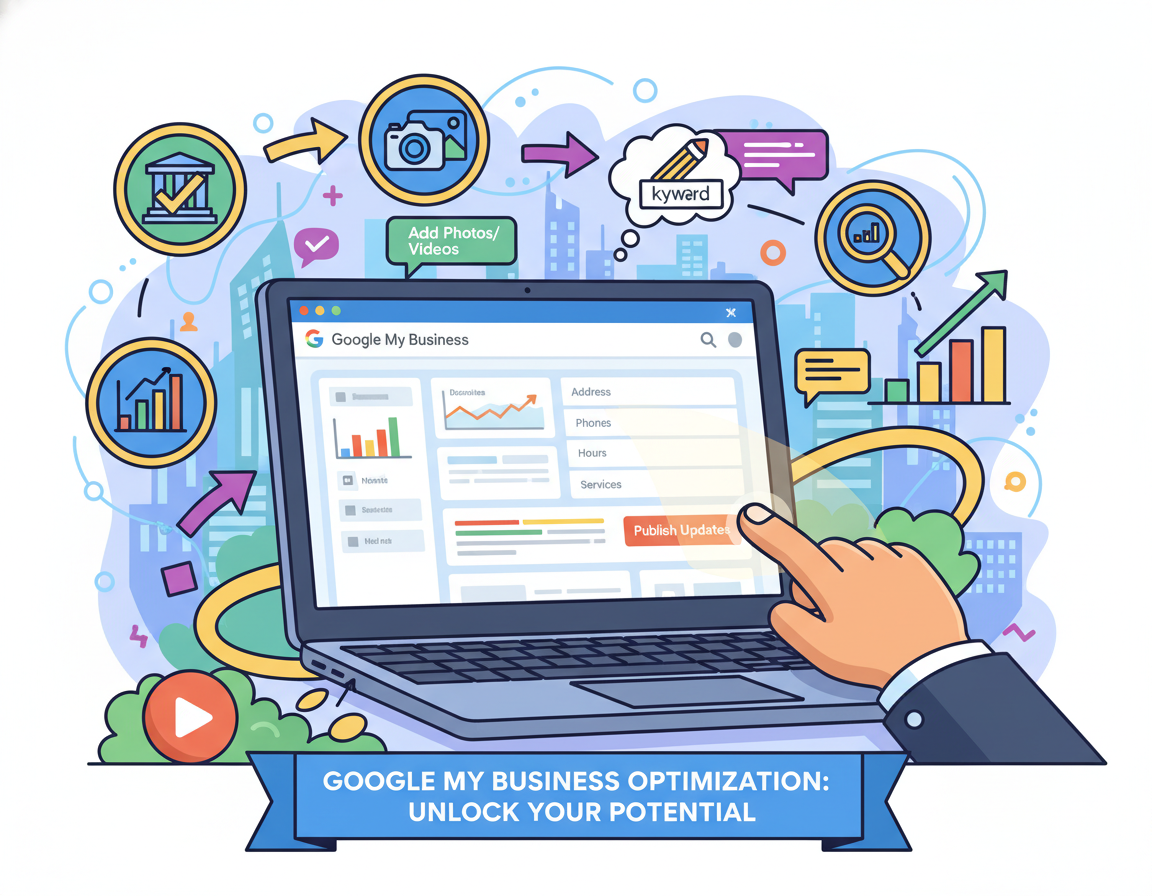
How to make a new Google Business Profile listing
Go to your Google account and open the Google Business Profile workflow. Use an account tied to your business domain when possible to reduce future access issues. Add the official business name, address or service area, business category, phone number, website, hours, and a clear description.
Fill out all relevant fields. Fully filled entries increase local relevance and optimize your GMB listing for searchers. Add fresh photos and correct hours to prevent confusing customers.
Claiming an unclaimed listing and requesting ownership when needed
If the listing is not claimed, click “Own this business?” or “Claim this business” from the knowledge panel. Follow prompts to verify your connection to the business. If the panel indicates another owner, use the request access link in your Google Business Profile account.
Upon requesting ownership, the existing owner gets an email and a seven-day window to reply. Track the request status in the dashboard. If access is denied or unanswered, contact Google Business Profile support and follow the appeal process to request ownership. Keep documentation handy to support your claim.
Quick GMB profile tips: keep consistent NAP data, use a business-domain Google account, and monitor the listing after claiming. These moves make it easier to find GMB listing entries, claim GMB listing records when needed, and optimize GMB listing content for local discovery.
Proven Verification Methods For GMB
Getting your listing verified is key for local visibility. GMB verification keeps your business safe from unwanted changes. It also unlocks special features in Google Business Profile settings. Select the right method for your business size and location, and follow GMB best practices to prevent delays.
Postcard validation is the default method for most physical stores. Google sends a postcard with a code, usually arriving within 14 days. Do not make major listing edits while the postcard is in transit. Enter the code in Google Business Profile to complete verification. Should the card fail to arrive, ask for a replacement and double-check the address for faster delivery.
Phone call and email options appear when Google offers them. Phone verification delivers a text or automated call to the listed number. Pick up and type in the code to complete. Email verification sends a verify button or code to an accessible account tied to the listing. These methods are faster than mail but only available in select cases.
GSC instant verification functions if the same Google account owns a verified URL in Search Console. It allows you to bypass the postcard and verify instantly via your account.
Video chat verification is reserved for special cases. Google may schedule a Google Meet or Hangouts session to see live views of the premises, logo, equipment, vehicles, or tools for service-area businesses. Have clear visual evidence and have a representative ready to answer questions.
Bulk verification helps chains and franchises with 10 or more locations. Organizations complete a bulk upload and provide required documentation to verify multiple listings at once. Adopt this for scalable control and to follow best practices for multi-site firms.
My Business Provider program allows approved organizations like Chambers of Commerce and banks to generate verification tokens for members. Resellers, SEO agencies, and consultants don’t qualify. Be aware that the Trusted Verifier program is gone, so use current official methods.
| Verification Type | Typical Use Case | Duration | Action Required |
|---|---|---|---|
| Most storefronts | Up to 14 days | Verify address; input code | |
| Phone | Locations with phone lines | Minutes | Answer call/text; enter code |
| Businesses with accessible business email | Fast | Click link or enter code | |
| Search Console | When site URL is verified in Search Console | Immediate | Claim with same account |
| Video chat | Special cases; remote verification | Scheduled | Show live video of site |
| Bulk verification | Chains (10+ sites) | Review dependent | Upload data & docs |
| Provider Program | Members of approved organizations | Varies | Obtain token from provider for member listings |
Stick to GMB verification rules to maintain listing stability. Ensure contact info and addresses are current before starting. Limit edits while a verification request is processing. After verification, apply GMB best practices like correct categories and regular photo updates to maximize search and Maps performance.
User Management, Permissions, and Location Grouping
Proper account governance keeps listings safe and consistent. Establish rules regarding who edits data, answers reviews, and publishes posts. Employ role-based access to minimize risk and allow teams to handle updates and interactions swiftly.
Primary owner, owner, manager, and site manager each have distinct permissions. The primary owner has full control and cannot be removed unless ownership is transferred. Owners have similar rights, including adding/removing users and deleting listings.
A manager can modify business details, posts, and services but cannot manage users or delete the profile. Site managers have limited rights like adding photos/posts and replying to reviews, viewing most other settings.
Follow GMB best practices by assigning the minimum privilege that allows work to get done. Refrain from granting owner-level access to outside agencies unless strictly necessary. Keep the business as primary owner to avoid accidental loss of control or listing deletion when third parties change roles.
Set up a recurring audit to check access for each listing. Remove stale accounts, confirm permissions after staff changes, and log transfers of ownership. Regular audits lower the chance of fraud and support consistent GMB listing optimization across locations.
For businesses with many locations, use location groups to consolidate control. Make a group in the dashboard, add listings, and assign group-level users to manage permissions for multiple sites. This method streamlines workflows for chains, franchises, and multi-office companies.
| Access Level | Main Permissions | Best For |
|---|---|---|
| Main Owner | Total control, transfers, user mgmt, deletions | Execs or admins needing permanent access |
| Owner | Manage users, edit settings, delete listings | Senior staff managing key changes |
| Listing Manager | Edit business info, posts, services, respond to reviews | Marketing team members responsible for daily updates |
| Location Manager | Limited edits: photos, posts, review responses, view insights | Local staff/managers for interaction |
Document every access level and the reason when managing GMB users. Employ location groups to ease permission updates and speed up optimization across addresses. These actions follow GMB best practices and lower the risk of expensive errors.
GMB Optimization Checklist
Use this checklist to make small updates that lift local visibility and improve GMB listing optimization. These points focus on accuracy, strategy, and hours that fit GMB ranking factors. Follow each step uniformly across your website, directories, and marketing channels to bolster your local SEO checklist.
Consistent Name, Address, and Phone (NAP)
Ensure the business name matches your signs, legal docs, and website. Avoid adding keywords, services, or city names to the official name. Stick to one address format everywhere and check it with validation tools.
For phone numbers, list the operational local number as Primary Phone when possible. If using call tracking, make it a secondary number unless it’s the main line customers call. Ensure NAP fields are identical across profiles to limit confusion and safeguard ranking signals.
Strategic selection of primary and secondary categories
Pick the most accurate primary category. That one choice strongly influences how Google classifies and ranks your listing. Add all relevant additional categories that truly reflect services you provide.
Keep the primary category consistent across multiple locations. Audit competitor categories with tools such as the Phantom extension to spot gaps and opportunities. This category strategy ties directly into GMB listing optimization and the broader GMB ranking factors.
Refining business hours, holiday hours, and short names
Enter regular business hours customers can rely on. Add special hours for holidays, seasonal shifts, and events so searchers see accurate availability. Seasonal businesses should use special hours rather than changing the regular schedule.
Make a short name (max 32 chars) for sharing and review links. Verify the short name and hours appear the same on social profiles, website contact pages, and any local ads to keep consistency across your local SEO checklist.
| Checklist Item | Action Step | Importance |
|---|---|---|
| Business Name | Use exact storefront/legal name | Avoids bans, builds trust |
| Address Format | Standardize street, suite, ZIP | Improves citation consistency and geocoding accuracy |
| Primary Phone | Use local line | Boosts user experience and accurate call tracking |
| Extra Numbers | Add tracking as secondary | Keeps primary contact clear while measuring campaigns |
| Primary Category | Pick best option | Impacts rank & relevance |
| Additional Categories | Add relevant services | More search coverage |
| Regular Hours | Set public hours | Reduces confusion and missed visits |
| Special/Holiday Hours | Schedule exceptions in advance | Prevents bad user experiences and negative signals |
| Profile Name | Make short name | Easier sharing |
Improving Listing Media: Photos, Products, Services, And Dining Menus
High-quality visuals and product details make your Google Business Profile pop. Use a steady photo cadence and full product or service entries. These steps help keep your listing fresh and useful.
Types of photos and frequency
Start with a complete initial set: one logo, one cover image, three team shots, and more. Professional images build trust. Bad images can decrease clicks and conversions.
Upload photos regularly. Google notes photo-upload frequency when ranking active listings. Try to add new images every two to four weeks.
Entries for products, services, and food
Employ the Products and Services sections if possible. Create clear collections and add each item with a name, price, and description. Ensure descriptions are keyword-rich and focused on customers.
Restaurants should enter menu items directly in the profile, not just as a PDF link. This helps Maps and the Search Generative Experience show relevant snippets.
Virtual tours and professional photography
Hire a Google pro for an indoor Street View tour. Places like hotels and salons often get more interest with tours. Google says tours boost reservations and visibility on Search and Maps.
| Item | Starting Count | Frequency | Why it Matters |
|---|---|---|---|
| Brand Logo | 1 | When brand changes | Builds brand recognition |
| Cover photo | 1 | Quarterly or with seasonal campaigns | Controls first visual impression on Maps and Knowledge Panel |
| Staff Photos | 3 | 1-3 months | Builds local trust and humanizes the business |
| Interior photos | 3 | Monthly to quarterly | Shows vibe & expectations |
| Exterior photos | 3 | Quarterly/Signage change | Makes the location easy to find and reduces friction |
| Product/service images | 3+ | Biweekly to monthly | Highlights items & converts |
| Products/services entries | Main items | New items/prices | Improves relevance for queries and supports Google My Business optimization |
| Menu items (restaurants) | Top dishes | Seasonal/Monthly | Feeds Maps and SGE, boosts click-to-book and orders |
| Virtual tour | 1 | As business layout changes | Enhances visual real estate and can double interest in reservations |
Apply these GMB best practices to improve your GMB listing content. Sharp images, correct data, and a tour make for a better profile and user experience.
Conversion Tracking, Link Optimization, And URLs
Links on your Google Business Profile convert views into actions. A well-chosen URL and tracking plan help you measure calls, bookings, and form fills. Use these practical steps to improve conversions and support GMB listing optimization across single and multi-location setups.
Pick the right URL for each location. Single sites should link to a fast, mobile-friendly homepage. Brands with many sites must link each to a dedicated landing page. Each landing page should use https, show a clear CTA, display the phone number prominently, and include a short lead form to capture visitors.
Employ appointment, menu, and booking links to lower friction. Set the Appointment URL to a booking system or contact page that accepts mobile users. Eateries should link Menu URLs to HTML pages, avoiding PDFs. If you use Reserve with Google or a scheduling partner, confirm the integration with the provider so third-party links display correctly. These minor steps will help optimize GMB listing actions.
Implement UTM parameters for exact tracking. Build campaign URLs with source=google, medium=organic, campaign=gmb and add a location identifier for multi-site campaigns, for example campaign=gmb5. Distinguish link types with content=primary, appointment, or menu. Monitor tagged visits in Analytics to attribute actions to the profile.
Monitor conversion paths and iterate. Compare landing page performance for bounce rate, time on page, and conversion rate. If a page underperforms, test simpler CTAs, fewer form fields, and faster load times. Regular checks and small changes will help you optimize GMB listing performance over time.
Use GMB tips for link maintenance. Keep URLs updated after redesigns, update appointment links when a new booking tool is adopted, and confirm menu pages reflect the latest offerings. These practices boost trust and support long-term Google business listing optimization.
Review Management, Q&A, And Attributes
Positive reputation signals make your business distinct. Getting reviews, answering questions, and updating attributes is key. These actions are central to any GMB optimization plan.
Getting reviews properly
Ask for reviews in person after a good experience. Send a short email with a direct review link. Include a review request on receipts or follow-up texts when it’s right.
Use trusted platforms like BrightLocal or Podium to send requests at scale. Always follow Google review policies. Explain to customers how their reviews help your business.
Replying to feedback, good or bad
Appreciate customers for positive feedback quickly. For complaints, stay calm and acknowledge the issue. Offer to resolve the problem offline and give distinct next steps.
Solving issues publicly demonstrates care. It’s a key part of GMB best practices for reputation.
Controlling Questions & Answers and traits
Use the Questions & Answers feature to address common questions. Post likely customer queries and answers. This ensures prospects see correct info immediately.
Set attributes like wheelchair accessible and languages spoken in Info > Attributes. Check for user attributes and fix errors fast. Accurate attributes improve the user experience and support Google My Business optimization.
Regularly follow this GMB profile tips checklist. Small, consistent actions lead to significant gains in search and Maps. Reputation work is part of ongoing GMB optimization for lasting local success.
Signals For Local SEO: Citations, Structured Data, And Audits
Strong local signals help Google link a business to nearby searchers. Prioritize consistent citations, schema, and audits for better visibility. Align on-page and off-page signals with your profile using the checklist below.
Building consistent citations across directories for prominence
List your business on key directories like Yelp, Facebook, Yellow Pages, and industry sites. Ensure NAP (name, address, phone) is the same everywhere. Inconsistent listings confuse Google and weaken GMB ranking factors.
Monitor citation sources and correct mismatches as part of routine GMB listing optimization.
Schema implementation and validation
Add LocalBusiness schema to each location page to mirror the Google My Business optimization details. Add address, phone, hours, coordinates, and rating markup. Validate schema with structured data tools to prevent errors.
Accurate markup helps search engines link page content to the GMB profile.
Auditing competitors: categories, reviews, and proximity
Audit with BrightLocal or Local Falcon to find competitors. Check categories, reviews, ratings, and links. Observe which competitors use LocalBusiness markup and where they earn links.
Use audit results to define realistic targets for reviews and category choices.
- Verify NAP consistency across at least 10 directories.
- Check that error-free schema is on every location page.
- Set review benchmarks based on top three competitors in your radius.
- Focus on proximity for categories and pages, as distance impacts rank.
Keep the local SEO checklist updated each quarter. Small citation fixes and clean schema reinforce GMB ranking factors. Regular competitive audits inform smarter GMB listing optimization and long-term Google My Business optimization.
Monitoring, Insights, And Ongoing Optimization
Regularly check your performance to make informed decisions. Use Google Business Profile Performance (Insights) to view how many views come from Search versus Maps. Track actions such as clicks and calls too.
Run geo-grid rank checks to see how visible you are in different areas. BrightLocal and Local Falcon show ranking shifts. This improves your understanding of visibility.
Keep your profile up to date with a monthly routine. Verify hours and upload new photos. Also, respond to reviews and post Google Posts or Offers.
Track tasks and frequency with a table. It helps teams align and avoid missing tasks.
| Action | Frequency | Reason |
|---|---|---|
| Insights review (Search vs Maps, queries) | Every Month | Analyze traffic & adjust |
| Geo-grid rank checks (Local Falcon/BrightLocal) | Quarterly/After changes | Map visibility & issues |
| Hours and special hours verification | Monthly | Accuracy for users & AI |
| Upload Photos | Monthly Upload | Keep listing current and boost engagement |
| Reply to Reviews | Weekly | Protect reputation and improve local signals |
| Create Posts | Biweekly | Show activity and influence short-term visibility |
| Audit links, UTM tracking, and landing pages | Monthly Audit | Track conversions |
| Duplicate listing and attribute audit | Every Quarter | Prevent conflicts and maintain consistent NAP |
Use these GMB tips daily. Small updates can make a big difference. Use the GMB optimization checklist to keep your team on track and see your GMB grow.
Summary
A fully optimized Google Business Profile is key for local visibility and attracting customers. This checklist covers everything from claiming your profile to adding rich content like photos and menus. This makes sure you appear correctly in Search and Maps.
It’s also crucial to keep your profile current. Utilize the checklist for Q&A, reviews, and more. Adding UTM tracking helps gauge how well your efforts work. Staying consistent with these practices keeps your business visible as search technology evolves.
Firms like Marketing1on1 can assist with GMB management. They audit listings, track results, and update profiles. Regular checks and updates help your business stay competitive and draw in customers when they search.