
Google Business Profile Photo Optimization: Increase Local Visibility
Your Google Business Profile is essential to bringing in local customers, and photos are a core part of it. Google says a full and up-to-date Business Profile can support visibility in local searches. Images and videos contribute to relevance, proximity, and visibility.
If you want to be noticed across U.S. markets, upgrade your GMB photos. High-quality, fresh visuals produce more clicks and user actions. Evidence suggests that photo updates increase listing views and engagement.
Beyond better aesthetics, optimizing photos drives performance. It helps people discover you Tacoma SEO services and engage. Tips like crisp imagery, descriptive filenames, and geo-tagging support discovery. Treating your Business Profile as a core channel and enhancing photo quality can turn local search into results.
Great photos make a compelling first impression on your Business Profile. Bright, sharp images set you apart within results. As a result, users are more likely to visit your site or request directions.
How photos impact first impressions and CTR
Images capture attention first. High-quality images tend to increase clicks in competitive local SERPs. Good GMB photos optimization—like even lighting and focused subjects—converts browsers into visitors.
Data connecting photos with better local results
Google reports that profiles with photos drive more user actions. BrightLocal and case studies show profiles with photo updates gain more views. A large client experienced consistent view growth and notable metric lifts after new photos.
Trust, engagement, and conversion effects of photos
High-quality photos boost credibility by showing your business is real and current. Photos that match your services and location increase confidence. Following GMB photo best practices boosts engagement and conversion rates with well-completed profiles and positive reviews.
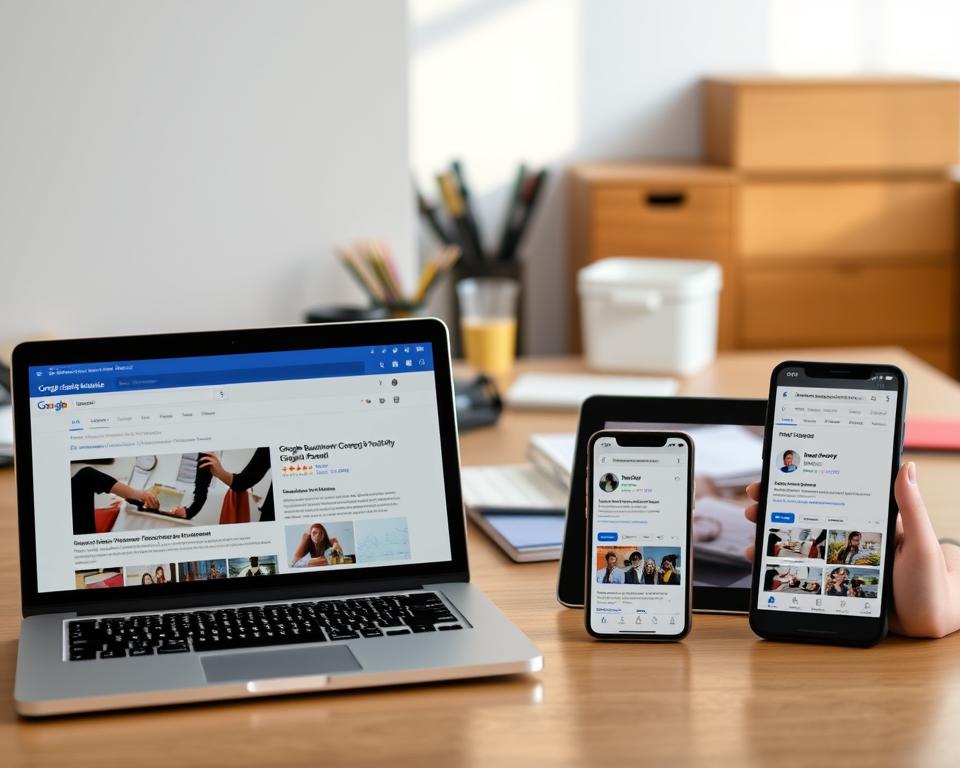
Optimizing GMB photos
Your image optimization work should focus on clear goals. Goals include more clicks, improved trust, and increased visibility. It shows customers what to expect and signals activity/relevance to Google.
Core goals of optimizing GMB photos
It’s the selection, editing, and publishing of accurate, representative images. Authentic, professional photos make your offering clear at a glance. Focus on engagement, calls/directions, and trust via clear imagery.
How photo optimization fits into your Business Profile strategy
Alongside posts, reviews, categories, products, and Q&A, photos are central. When images match your category—like restaurants showing dishes or salons showing styles—you become more topically relevant to searchers. Combine photos with accurate hours and verified info for stronger impact.
Google signals: activity, relevance, quality
Local ranking considers activity, relevance, and quality. Regular image uploads show your listing is maintained and help it rank higher in local packs. Quality photos increase perceived professionalism.
Maintain a consistent upload cadence. Uploading weekly or biweekly sends a signal that your listing is maintained. Combine photos, posts, and responses to bolster presence.
Keep a checklist for image selection: factual accuracy, context, and clarity. This supports photo SEO and aligns with Google’s local expectations.
Photo types to include on your profile
Photos showcase your story and aid visit/contact decisions. Use a mix that shows the appearance, feel, products, team, and real customer moments. A varied set supports optimization and boosts local engagement.
Best practices for cover and logo photos
Choose a crisp cover photo that represents your front or flagship product. Ensure bright lighting, good framing, and minimal overlays. Use a distinct logo to improve recognition in Search and Maps.
Key photo categories: exterior, interior, product, menu, team
Show exterior signage and entrances to help customers locate you. Interior photos should show seating, layout, and atmosphere. Feature hero products with natural light and tight composition.
Team images humanize your brand and build trust. Mix candid and staged images for a balanced presentation. Authentic on-site relevance aligns with best practices.
User-generated content and event or seasonal images
User-generated content adds credibility and authenticity. Ask customers to tag photos; curate the best into your gallery. Seasonal/event visuals keep the gallery current.
Update weekly when possible to maintain freshness. That habit helps you optimize Google My Business photos while signaling activity and relevance to Google. Avoid stock; favor genuine, best-practice moments.
Image quality standards and Google photo guidelines
To meet Google’s expectations, use real, clear photos that show your business. Trust rises and optimization improves with accurate, quality visuals.
Get lighting and resolution right. Upload high-resolution photos with balanced lighting and sharp focus. Skip dark, blurry, or heavily filtered photos. They improve quality and align with authentic-visual preferences.
Quality requirements: resolution, light, authenticity
Choose images that remain sharp after cropping. Size for a 1332×750 cover and square-safe thumbnails. Natural shots of storefronts, interiors, staff, and products perform best.
Keep edits minimal. Authentic visuals lower removal risk and aid long-term engagement. When you follow GMB photo best practices, users get an accurate view of your offerings.
Formats and file-size limits
Google accepts JPG and PNG formats only. Each file must be between 10 KB and 5 MB. Files outside these limits will fail to upload or remain in Pending until corrected.
| Field | Recommendation | Details |
|---|---|---|
| File formats | JPG, PNG | Use PNG for graphics with transparent backgrounds, JPG for photos |
| Size | Between 10 KB and 5 MB | Balance compression with clarity for Maps/thumbnail views |
| Cover dimensions | 1332 x 750 px recommended | Center subject; allow square/mobile crops |
| Approval time | About 24–48 hours | Monitor status and re-upload if needed |
Content policies to avoid rejection or removal
Steer clear of stock photos, misleading images, and heavy promotional overlays. Use minimal on-image text/branding and avoid flashy effects. Policy violations risk rejection during review.
Follow these rules to enhance GMB photo quality and to keep your uploads live. Using consistent GMB photo best practices helps your listing remain accurate and discoverable in local searches.
GMB image optimization: file naming and metadata
Start by treating each photo as a signal to Google. Filenames/alt/metadata help local photo optimization.
Use descriptive filenames
Rename files prior to upload. Choose keyworded, descriptive names (e.g., artisan-bakery-exterior.jpg; downtown-plumber-truck.png). It gives crawlers context and supports photo SEO independent of page copy.
Alt text and captions
Where the platform allows, add concise alt text that describes the photo and mentions intent, such as “artisan bakery exterior showing outdoor seating.” Captions contribute context and may improve relevance.
Metadata and consistency
Align EXIF with business address and contact data. Inconsistencies create mixed signals. Consistency supports optimization and trust.
Geo-tagging tips
Embed location coordinates or use device location when capturing images. Geo-tagging ties a photo to a physical place and strengthens local relevance. Geotags help Google link images to your listing.
Quick checklist
- Retitle files with meaningful, SEO-friendly names ahead of upload.
- Provide concise, accurate alt text and captions where possible.
- Confirm EXIF data corresponds to your profile location and phone number.
- Use geo-tagging on the device or insert coordinates while editing.
-
- Cover image: 1332 x 750 px, works with square crops.
- Profile & logo: high-res PNG or JPG for clean thumbnails.
- Gallery photos: 10 KB–5 MB, JPG for photos, PNG for text or logos.
- Keep subject centered, add buffer for variable crops.
- Use careful compression and test on multiple devices.
-
How frequently to update GMB photos
Keeping your Google Business Profile updated is key. It indicates your business is up-to-date. Regular updates tell Google you’re in charge, which can improve your local ranking and build trust.
Suggested upload cadence to signal activity to Google
Upload at least one new photo every seven days. This maintains your profile current and engaging. It also helps prevent a stale look in your gallery.
Seasonal and promotional refresh strategies
Include holiday or seasonal images to keep your profile timely. Swap in photos for special offers or events. These updates can increase clicks and make your profile more appealing to searchers.
Monitoring performance changes after photo updates
Monitor listing views, search views, and more around each upload. Contrast changes to see what works best. A/B tests can show which photos get the most attention.
Type of Update How often Objective Metric to Watch Weekly new photo Every 7 days Signal recency Profile views Seasonal refresh Each season Match seasonal intent Search impressions Promo-driven update As needed Increase near-term actions Clicks/calls Gallery maintenance Biannual review Remove weak images Maps views & directions Optimizing photos at scale for multi-location businesses
When your brand has many locations, clear image rules are essential. Establish a style guide that details resolution, lighting, angles, and what’s important. This guide helps ensure all Google My Business photos look consistent and professional.
Give local staff roles for taking photos and a central team for editing. Local teams should follow simple guidelines for framing, timing, and approved subjects. The central team then confirms all photos achieve quality standards.
Leverage spreadsheets for bulk uploads and enterprise tools for updating many listings at once. Google allows bulk edits through CSV imports. Tools like popular enterprise tools make managing GMB photos easier without extra manual work.
Automate tasks like color correction and cropping with AI. It can also create descriptive filenames and alt text. This way, you can scale image ops while keeping them search-relevant.
Schedule regular updates, like every quarter or with promotions. Monitor what works best and update your style guide. With cohesive guidelines, bulk workflows, and AI assistance, you can manage your brand’s image across many locations.
How to measure GMB photo impact
Begin with your Google Business Profile performance reports to track how photo work impacts behavior. Look at total listing views, search views, map views, and actions like website clicks, calls, and direction requests. Keep in mind, there’s a short approval lag of 24–48 hours after uploads.
Core metrics to monitor
Record views, searches, and actions by type to see where photos have impact. Apply month-over-month and year-over-year comparisons to normalize results. To measure GMB photo impact, record baseline metrics for at least 30 days prior to refresh.
Compare refreshed vs. control locations
Run a controlled experiment by refreshing photos on a subset of locations and leaving others unchanged. Maintain measurement windows identical and match locations by size and seasonality. Case studies show photo-refreshed locations often post significant gains in views and actions against controls.
Measure Data to record Purpose Total profile views Daily and weekly counts before and after photo updates Shows overall visibility shifts tied to GMB photos optimization Search/Map split Break out search vs. map Identifies where lifts occur Customer actions Website clicks with UTM tags, call logs, direction requests Helps attribute offline conversions to photo changes Actions per view Actions divided by views over the same period Qualifies traffic Attribution tips: track clicks, calls, and directions
Add UTM parameters to the website link in your listing so Google Analytics shows click paths. Use call-tracking numbers to isolate phone leads that start from your profile. Review direction requests by daypart to spot patterns after uploads.
Make your experiment windows aligned and factor in promotions or seasonal events that could distort readings. When you measure GMB photo impact and apply proven GMB photos optimization, you can more clearly increase GMB photo visibility across locations.
Practical step-by-step checklist to optimize your GMB photos
Apply this simple checklist to ready your GBP photos. Start with Prepare, Create, Publish to apply GMB photo best practices. This helps keep your listing looking consistent.
Prep phase
Review every image on your Business Profile and any user-generated content. Flag missing types like exterior shots, team photos, or product close-ups.
Set image guidelines for cover size (1332 x 750 px), formats (JPG, PNG), and file size limits (10 KB–5 MB). Specify lighting, composition, and brand color rules. Define tasks: local staff takes photos, marketing team edits, and your agency or Marketing1on1 uploads and reports.
Create
Shoot photos on location, following your guidelines. Feature exterior, interior, product, menu, team, events, and user-generated content. Make sure they are useful for customers.
Adjust photos to balance exposure and color, but avoid heavy filters. Store as JPG or PNG with careful clarity and compression.
Name files with keyword-rich names like pizzeria-main-dining-room-exterior.jpg. Provide alt text and captions where possible. Geo-tag images to your business location to reinforce local signals.
Go live
Upload new content regularly, targeting weekly updates. For brands with many locations, leverage bulk upload to keep things consistent.
Track for image status like Pending, Not approved, or Live. Google may take 24–48 hours to process. Review how images look on desktop, mobile, and Google Maps and re-upload if needed.
Monitor how images affect searches, views, and actions pre/post upload. Apply this data to refine your GMB photos optimization checklist and inform future updates.
Phase What to do Output Timeframe Preparation Audit existing images, set guidelines, assign roles Inventory + guidelines + role map about 1 week Create Shoot and edit images, rename, add alt text, geo-tag Optimized assets + tags As needed Launch Schedule uploads, QA statuses, device checks Live gallery, status log, rendering checks Weekly for new content Measure Track views, searches, actions; compare beforeafter KPI dashboard Monthly cycle Partnering with Marketing1on1 for professional GMB photo strategy
Want to make your Google My Business photos better? Working with Marketing1on1 is a strong choice. They start by checking your Business Profile for completeness and accuracy. This step is key to making your GMB photos work well.
They look for any missing info, create a photo inventory, and guide you on how to keep your brand consistent. This helps you use the same style for all your locations.
Your team can either take photos on-site or follow Marketing1on1’s remote advice. They offer photo editing, AI enhancements, and more. This helps ensure your photos are on point and follow Google’s rules.
Marketing1on1 also tests different photo strategies to see what works best. Their photo updates have helped big clients get more views and visits. You’ll get ongoing reports showing how your photos are performing.
Marketing1on1 can propose a plan to pilot a subset and then roll out. By working with them, you can create a photo program that grows your local presence and brings more customers to your business.
Follow these steps to optimize Google My Business photos and boost discoverability. Small changes in naming and metadata create stronger signals and better performance for your local listing.
Cover and thumbnail image best practices for GMB
Select cover and thumbnail photos that tell your story at a glance. Upload clear, evenly lit shots that focus on your storefront, interior, or signature product. This way, visitors immediately understand what you offer.
Test images on desktop, mobile, and Google Maps. Confirm how crops change and which parts remain visible.
Cover dimensions and cropping tips
Use a cover photo approximately 1332 x 750 px for clarity on most displays. Ensure the central subject stays prominent when the image is cropped. Preview across devices and re-crop if key elements are cut off.
Picking a brand-forward thumbnail
Use a thumbnail that uses your logo or a memorable brand mark. Upload a high-quality PNG or JPG that fits Google’s profile image needs. A clear thumbnail boosts trust and helps customers spot your business in crowded search results.
Keep on-image text minimal
Reduce on-image text sparse and place it near edges to avoid distortion or cropping. Excessive promotional language and large overlaid text can hurt credibility. Prioritize authentic visuals that support GMB photo quality while complying with Google’s preferences.
Adopt GMB image size recommendations and these practical tips to increase consistency. Routinely review how your cover and thumbnail appear. Then, adjust framing or retake photos to sharpen GMB photo quality and alignment with GMB photo best practices.
GMB image size recommendations for optimal display
You want your Google Business Profile to look crisp on search and Maps. Choosing the right pixel dimensions, file format, and compression is critical. This maintains clarity and prevents awkward crops. Follow these tips to optimize your GMB image optimization and ensure photos render cleanly on all devices.
Sizing guidance for cover/profile/gallery
Configure your cover 1332 x 750 pixels to fit wide search panels and stay safe when cropped. Use high-resolution PNG or JPG files for profile and logo images to maintain clear thumbnails. For gallery images, keep files between 10 KB and 5 MB. Use JPG for photos and PNG for logos or text that need crisp edges.
How different devices and Maps handle cropping
Google Maps and search results crop images differently based on device and layout. Center your main subject and leave buffer to prevent cutting off important parts. Preview images on phone screens, tablets, and desktops to make sure key content is visible.
Balancing compression and image clarity
Leverage compression to speed loading without compromising sharpness. Start with moderate JPEG compression and test to an uncompressed PNG for specific cases like menus or logos. If compression introduces artifacts, tune quality or use another format. Preview uploads in the Business Profile to verify clarity across browsers.
Quick checklist